From the desk of Murdock, Esq.
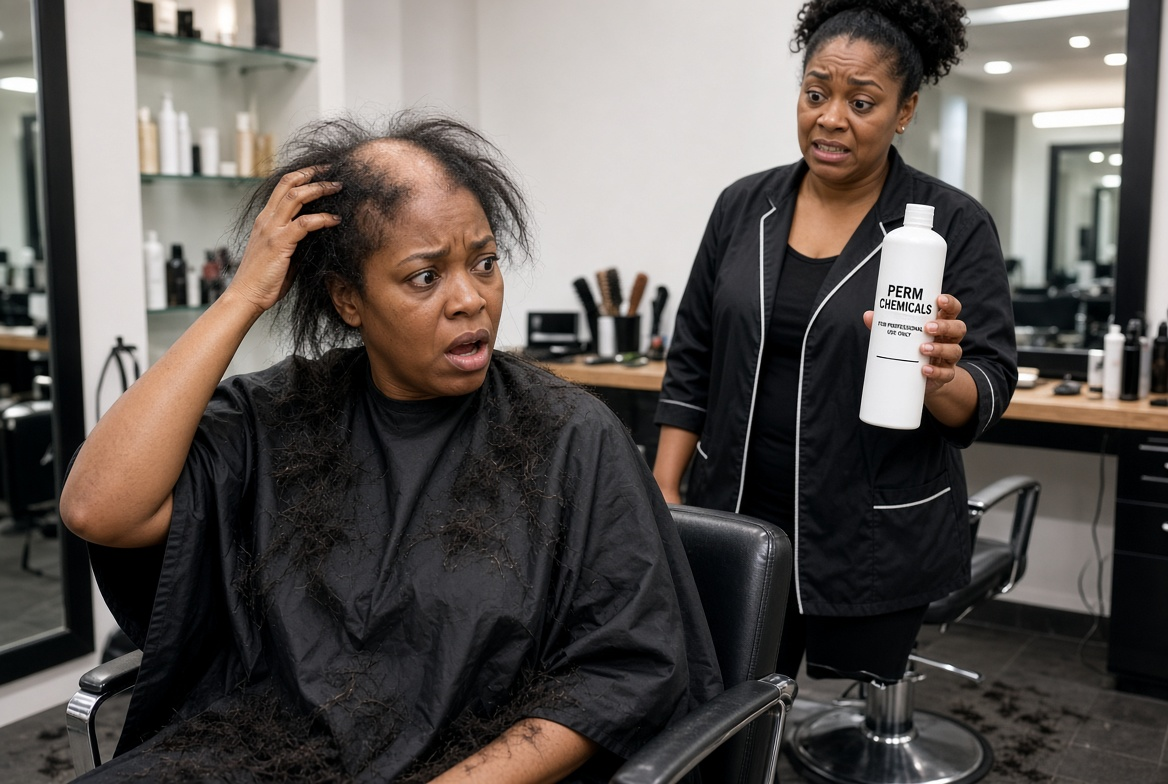
I am sitting in my office on the West Side of Chicago. I can hear the relentless grinding of the Green Line elevated train shaking the foundation of the building across the street. The air seeping through the cracked window pane smells of damp concrete, roasting coffee beans from the corner shop, and the sharp, freezing wind cutting off Lake Michigan. I run my fingers over the heavy cardstock of the latest court filings, reading the raised braille dots that tell a story of corporate greed so profound it makes my blood run cold. Just a few miles away, inside the brutalist concrete walls of the Everett McKinley Dirksen United States Courthouse, a massive legal war is unfolding. It is known on the docket as Multidistrict Litigation 3060. The corporate defense attorneys are walking those halls right now. I can almost smell the starch in their thousand dollar suits and hear the nervous clicking of their expensive pens. They are defending the indefensible. They are defending a beauty industry that has spent decades poisoning Black women for profit.
To understand this litigation, you cannot merely look at the dry text of the federal rules of civil procedure. You have to understand the deeply rooted, insidious nature of the Eurocentric beauty standard and the sociological warfare waged against Black Americans. This is not just a story about a defective product. This is a story about cultural theft, systemic racism, and the physical cost of assimilation.
For generations, the societal machinery of the United States coerced Black women into chemically altering their natural hair. The corporate world, the media, and the rigid social hierarchies dictated that natural Black hair was unprofessional, unkempt, or socially unacceptable. To survive economically, to get the job, to secure the housing, millions of women were heavily pressured into the salon chair to undergo painful, caustic chemical treatments.
But the culture fought back. During the nineteen seventies, the Black Power movement sparked a powerful and beautiful reclamation of natural hair. The Afro was not merely a hairstyle. It was a profound political declaration of self love and resistance. Cultural icons and musical legends like James Brown proudly sang about being Black and proud. Revolutionary actors like Cicely Tyson wore their natural hair on national television, which was an incredibly radical act at the time. Stars like Pam Grier and Nina Simone championed the natural look as the absolute pinnacle of beauty. The Eurocentric beauty standard was suddenly under severe threat. And right here in Chicago, the economic power of that movement was harnessed by Black entrepreneurs. George E. Johnson founded the Johnson Products Company, a historically Black owned business that revolutionized the ethnic haircare market. They funded the iconic television program Soul Train. They launched legendary product lines that celebrated natural beauty. The money stayed in the community, and the messaging elevated Black pride.
Corporate America, however, has an insatiable appetite for new revenue streams and a deep seated allergy to independent Black economic power. The Eurocentric haircare industry pushed back with absolute ruthlessness. They did not just disagree with the natural hair movement. They bought the competition. In the nineteen nineties and early two thousands, multinational corporate giants like L'Oreal and Ivax executed highly aggressive corporate buyouts. They systematically purchased historically Black owned brands. L'Oreal acquired SoftSheen and Carson Products, merging them into a monolithic brand. This massive consolidation effectively stripped the economic power away from the Black community and transferred it directly to wealthy boardrooms in Paris and New York.
Once the multinational corporations controlled the market, they reinforced the Eurocentric standard by overlaying new messaging. They realized they could not entirely kill the desire for diverse styles, so they hijacked the market with new regimes. They aggressively pushed chemical relaxers. When the public became wary of the horrific scalp burns caused by lye based relaxers, the corporations pivoted to so called no lye formulas, which I now know were packed with hidden, toxic endocrine disrupting chemicals. Furthermore, they heavily promoted the use of synthetic extensions, toxic lace front wigs, and chemical treatments designed to mimic a European blowout. The message was insidious but clear. You can be beautiful, but only if you buy our products to aggressively alter your natural state. They gentrified our neighborhoods, and then they gentrified our hair.
This brings me to the terrifying healthcare problems on the immediate horizon with these new beauty regimes. The cancer risks of chemical relaxers are currently being litigated, but the next wave of mass torts is already brewing. The pivot to synthetic hair and lace front wigs has introduced a whole new cocktail of unregulated toxins into the Black community. I see a future healthcare crisis driven by the adhesives used for lace front wigs. These heavy duty glues contain harsh solvents and methacrylate chemicals that are causing severe contact dermatitis, permanent traction alopecia, and horrific chemical burns along the hairline. Furthermore, the synthetic hair fibers themselves are essentially cheap plastics. When exposed to heat from styling tools, these synthetic materials off gas volatile organic compounds and shed microplastics directly into the respiratory system of the wearer.
Even more disturbing is the continued, aggressive marketing of skin bleaching and lightening creams, a direct continuation of the Eurocentric demand for lighter skin. These unregulated cosmetics, often manufactured overseas and sold in local beauty supply stores, frequently contain highly toxic levels of mercury and hydroquinone. The long term use of these bleaching agents is creating a horrifying horizon of medical disasters, including severe renal failure, irreversible neurological damage, and extreme skin thinning that leaves the user vulnerable to severe infections and skin cancers. The industry is simply trading one toxic tort for another, constantly shifting the chemical burden onto the bodies of Black women while fiercely protecting their profit margins.
The current battlefield for these systemic abuses is the federal multidistrict litigation pending before Judge Mary M. Rowland in the Northern District of Illinois. Black's Law Dictionary (12th ed. 2024) defines multidistrict litigation as a special federal legal procedure designed to speed the process of handling complex cases, such as product liability suits, that involve common questions of fact pending in different districts. Over twelve thousand claims have been consolidated here. The catalyst was a landmark study published by the National Institutes of Health, commonly referred to as the Sister Study. The research revealed that women who frequently used chemical hair straighteners were more than twice as likely to develop uterine cancer compared to non users. The plaintiffs allege that the major cosmetic manufacturers knew or should have known that their products contained highly dangerous endocrine disrupting chemicals, specifically phthalates and parabens.
The World Health Organization defines an endocrine disruptor as an exogenous substance or mixture that alters the function of the endocrine system and consequently causes adverse health effects in an intact organism. These chemicals essentially bypass the protective barrier of the skin through microscopic tears caused by the highly alkaline relaxer paste. Once in the bloodstream, they act as xenoestrogens. They biologically mimic the structure of natural human estrogen, aggressively binding to receptors in the reproductive organs and triggering rampant cellular proliferation that leads to uterine fibroids, endometriosis, and cancer.
The fundamental legal claim driving these thousands of lawsuits is the doctrine of failure to warn. Black's Law Dictionary (12th ed. 2024) defines failure to warn as a product defect arising when the manufacturer or seller does not provide adequate warnings of a known or reasonably foreseeable danger associated with the product's use. The plaintiffs argue that L'Oreal and its subsidiaries intentionally omitted any warning labels regarding cancer risks because such a warning would have immediately decimated their incredibly lucrative sales. They chose silence because silence was profitable.
The corporate defense strategy has been a masterclass in obfuscation and procedural cowardice. They have utilized every loophole in the federal rules to shield themselves. For instance, L'Oreal's French parent company mounted a massive jurisdictional defense to avoid the federal litigation entirely. This defense is rooted in the Supreme Court precedent of Daimler AG v. Bauman, 571 U.S. 117 (2014). In that case, Argentinian residents sued a German corporation in a California federal court for human rights violations allegedly committed by the corporation's Argentinian subsidiary. The Supreme Court ruled in favor of the corporation, holding that a company is only subject to general personal jurisdiction in a state where it is incorporated or has its principal place of business. Utilizing this restrictive precedent, the French parent company successfully argued a lack of direct United States jurisdiction, leaving its American subsidiaries exposed while protecting its overseas assets.
But the defense recently suffered a catastrophic, deeply satisfying defeat in the state courts of Georgia regarding the statute of repose. The defense bar loves the statute of repose. It acts as an absolute legal guillotine. Black's Law Dictionary (12th ed. 2024) defines a statute of repose as a statute barring any suit that is brought after a specified time since the defendant acted, even if this period ends before the plaintiff has suffered a resulting injury. In Georgia, the strict products liability statute of repose is ten years from the date of the first sale for use or consumption. The cosmetic corporations attempted to use this law to completely dismiss the claims of women who had been using their relaxers for decades. They argued that because a woman bought her first box of relaxer twenty years ago, the ten year clock had expired, rendering her claim legally dead despite her recent cancer diagnosis. They wanted the court to view a lifetime of toxic exposure as a single, indivisible event anchored in the distant past.
The Georgia Supreme Court completely obliterated this callous argument in the landmark case of Burroughs v. Strength of Nature Global, LLC, No. S24G1387 (Ga. Oct. 15, 2025). In this highly significant case, the plaintiff alleged that she developed uterine fibroids as a direct result of buying and using chemical hair relaxer products manufactured by the defendants many times over many years. The corporate defendants filed motions to dismiss based on the ten year statute of repose. The Georgia Supreme Court ruled decisively in favor of the plaintiff. The court engaged in a rigorous analysis of statutory construction and held that the ten year statute of repose applies strictly on a per unit basis. The justices reasoned that every single individual container of chemical hair relaxer purchased constitutes a completely new first sale of that specific product. Therefore, each separate purchase resets the liability clock for any injuries caused, accelerated, or aggravated by that specific, individual exposure. This ruling was a massive victory. It allows claims tied to products sold within the ten year period to proceed despite a plaintiff's earlier purchases. The court did not decide whether the products caused her injuries.
The entire trajectory of the federal litigation in Chicago now speeds toward a critical chokepoint. The fate of the victims lies entirely in the hands of the federal judiciary, specifically regarding the upcoming evidentiary hearings. The next inflection point lies in the court's rulings on expert evidence. The timing of later case specific motions depends on the current scheduling orders.
The term Daubert refers to a critical standard of evidence. Black's Law Dictionary (12th ed. 2024) defines the Daubert standard as a rule of evidence regarding the admissibility of expert witness testimony, requiring the trial judge to act as a gatekeeper to ensure that scientific testimony is both relevant and reliable. This standard originates from the seminal United States Supreme Court case Daubert v. Merrell Dow Pharmaceuticals, Inc., 509 U.S. 579 (1993). In that historical case, the plaintiffs sued a pharmaceutical company, alleging that the anti nausea drug Bendectin caused horrific birth defects in their children. The Supreme Court established a new framework for expert testimony, ruling that trial judges must rigorously evaluate the methodology employed by scientific experts rather than just looking at their conclusions. The court provided a multi factor test, including whether the theory can be tested, whether it has been subjected to peer review, the known rate of error, and the general acceptance within the scientific community.
Under this rigorous standard, Judge Rowland must evaluate the plaintiffs' epidemiologists and toxicologists. The plaintiffs must prove both general causation, showing that the chemicals in the relaxers are biologically capable of causing cancer, and specific causation, proving that the chemicals actually caused the specific cancer in each individual plaintiff. The corporate defense attorneys will deploy their own heavily funded experts to tear the science apart. They will utilize the exact same playbook used by the tobacco industry and the asbestos manufacturers. They will attempt to manufacture doubt, arguing that the epidemiological studies only show a correlation, not a definitive causation. They will try to bury the truth under a mountain of statistical jargon.
If Judge Rowland rules that the plaintiffs' experts are scientifically reliable, it will unleash unprecedented liability across the entire global cosmetics industry. Surviving the Daubert motions will almost certainly trigger massive settlement negotiations, as these corporations are terrified of facing sympathetic juries in the bellwether trials set for two thousand twenty seven. However, if the judge excludes the plaintiffs' experts, the entire foundation of the mass tort shatters, and twelve thousand women will be summarily denied their day in court.
Justice in America is often just a luxury good, priced just out of reach for the people who need it most. The law is a heavy, blunt instrument, and it is frequently wielded by those who already hold all the power. The multinational corporations gentrified Black beauty, monetized the pressure to assimilate, and sold toxic poison in brightly colored boxes. They bought out the Black owned companies that celebrated natural beauty and replaced them with chemical regimes designed to alter and damage the natural state of Black women. And now, they are utilizing every procedural trick in the federal code to avoid paying for the physical devastation they caused.
But I hear the turning of the gears. The rulings in Georgia show that the judiciary is not entirely blind to corporate manipulation. The thousands of women who filed these lawsuits refuse to be silenced. They are dragging the insidious realities of the beauty industry out of the shadows and into the harsh fluorescent light of the courtroom. I will be watching the docket in November. I will be analyzing every single brief and every single ruling. The streets are watching, and I will not stop fighting until the absolute truth is officially entered into the public record, holding these corporate titans accountable for the toxic cost of their manufactured beauty.
From the desk of Murdock, Esq.